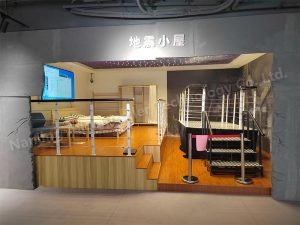
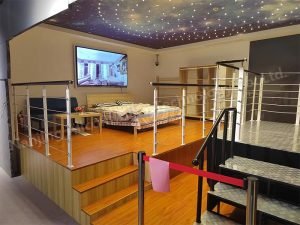
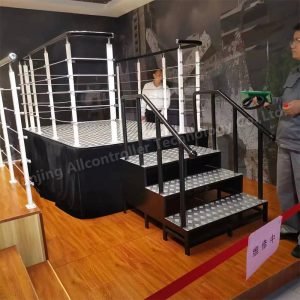
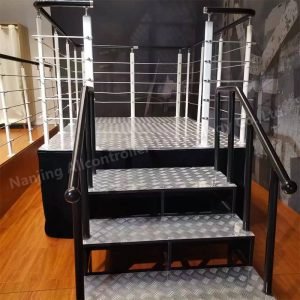
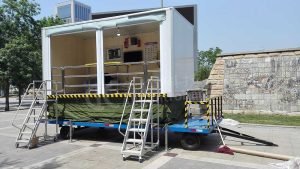
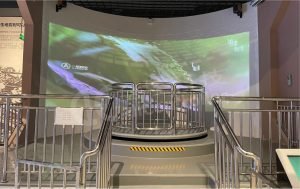
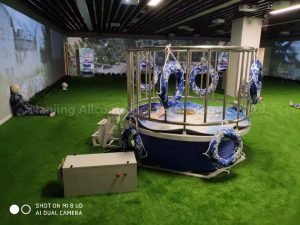
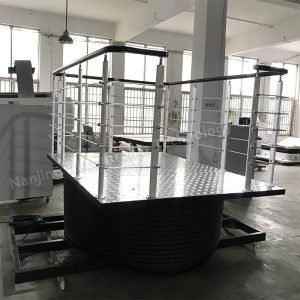
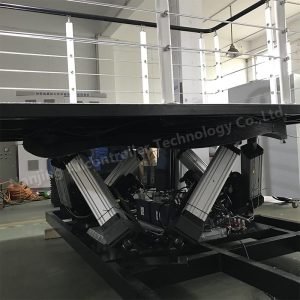
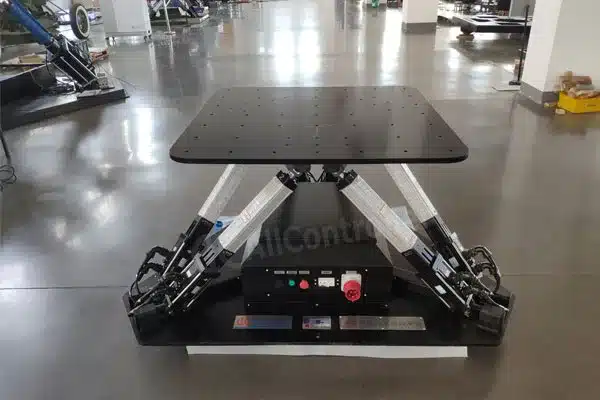
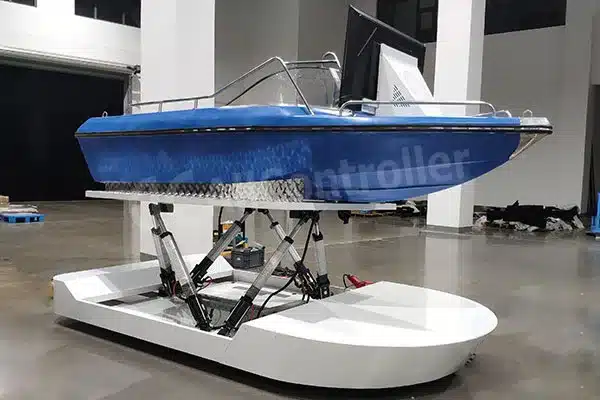
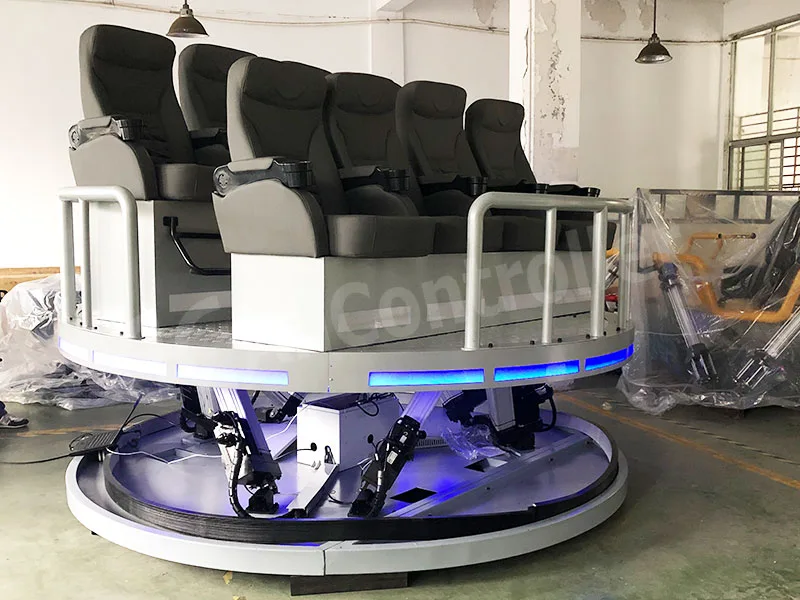
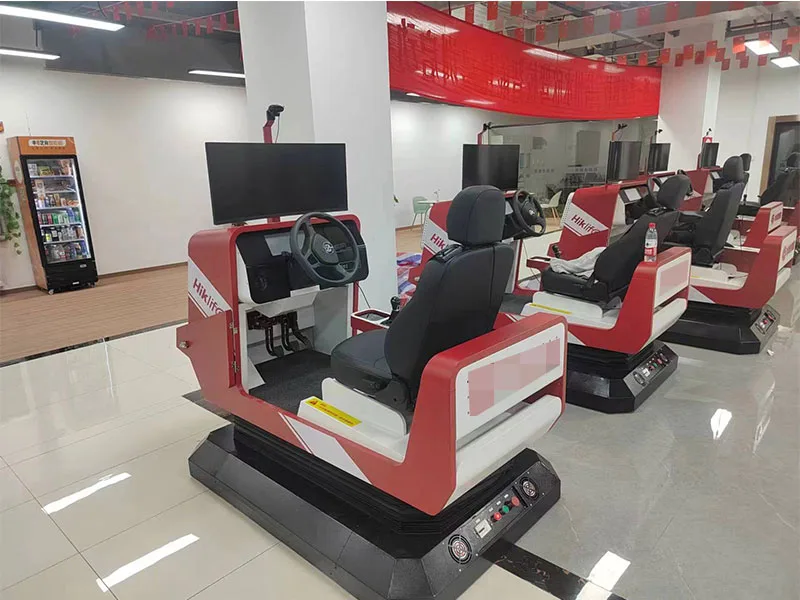
Earthquakes are extremely destructive natural disasters that pose a huge threat to human life, property and infrastructure. How to simulate earthquake scenarios through scientific and technological means and improve the reliability of earthquake resistance research, emergency drills and engineering tests has become an important topic in the global scientific research and engineering fields. Allcontroller uses 6DOF motion platform to deeply integrate high-precision motion control with earthquake simulation needs, providing the industry with an earthquake simulator solution.
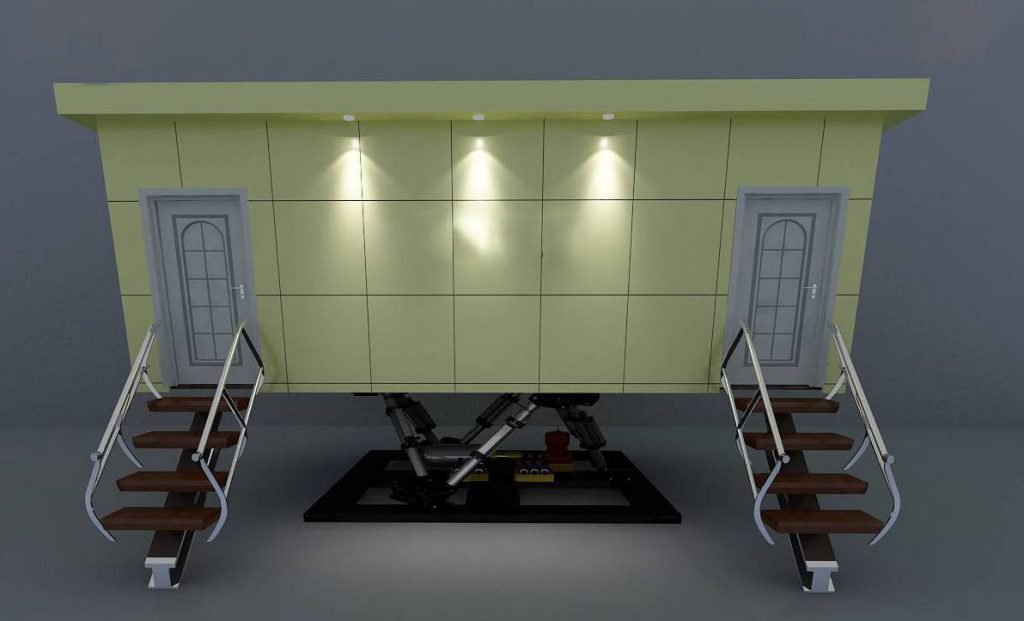
6DOF motion platform: core technology support for earthquake simulation
The 6DOF motion platform can reproduce the complex motion trajectories of seismic waves with high precision by precisely controlling the platform’s translational (X/Y/Z-axis) and rotational (pitch, yaw, and roll) motions in three-dimensional space. Compared to traditional hydraulic shakers, the Allcontroller platform is based on electrodynamic servo drive technology, combined with a modular design, to realize the following breakthroughs:
Realistic earthquake simulation: realistically reproduces acceleration, frequency and vibration amplitude characteristics.
Wide dynamic range: supports full frequency coverage from low-frequency slow vibration to high-frequency severe shaking, meeting the needs of simulation at different levels.
Flexible expansion: the platform size and load capacity can be customized according to user needs, suitable for laboratory research, large-scale building model testing and other scenarios.
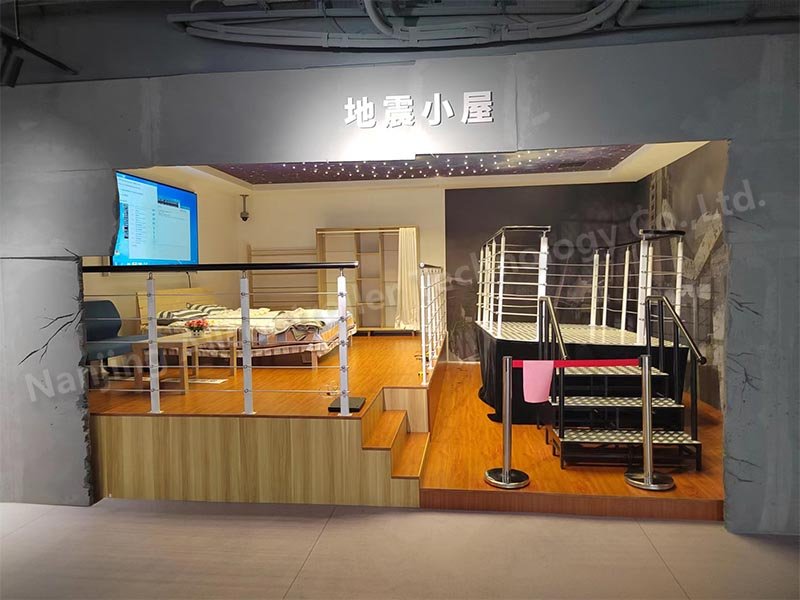
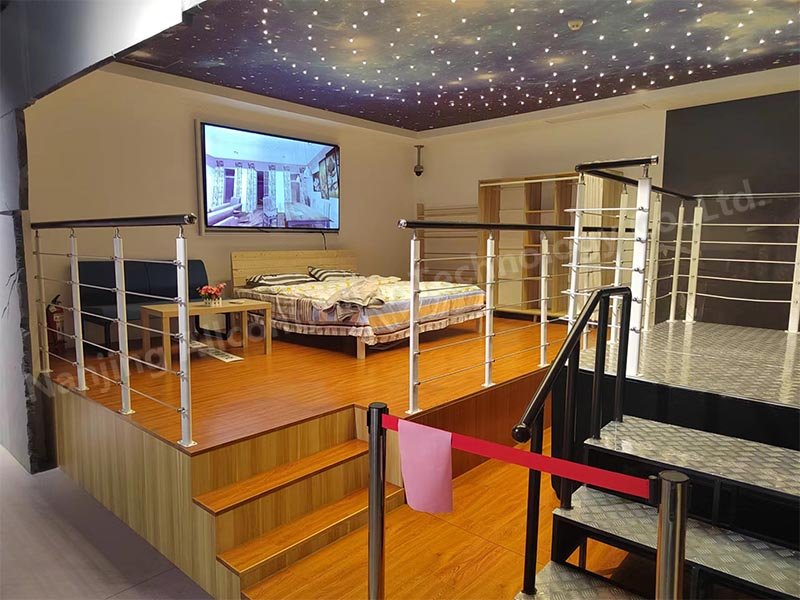
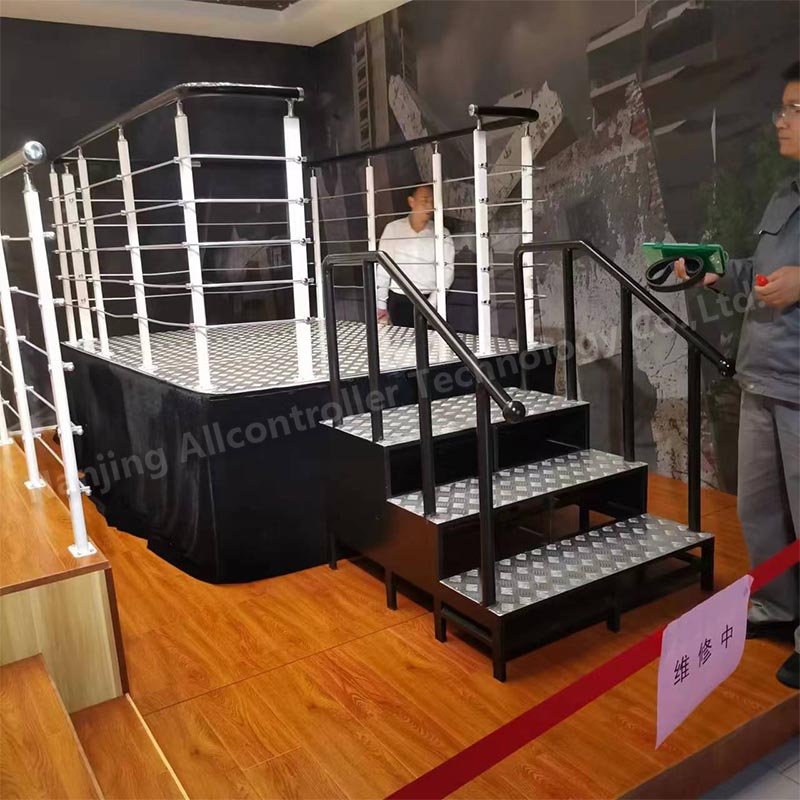
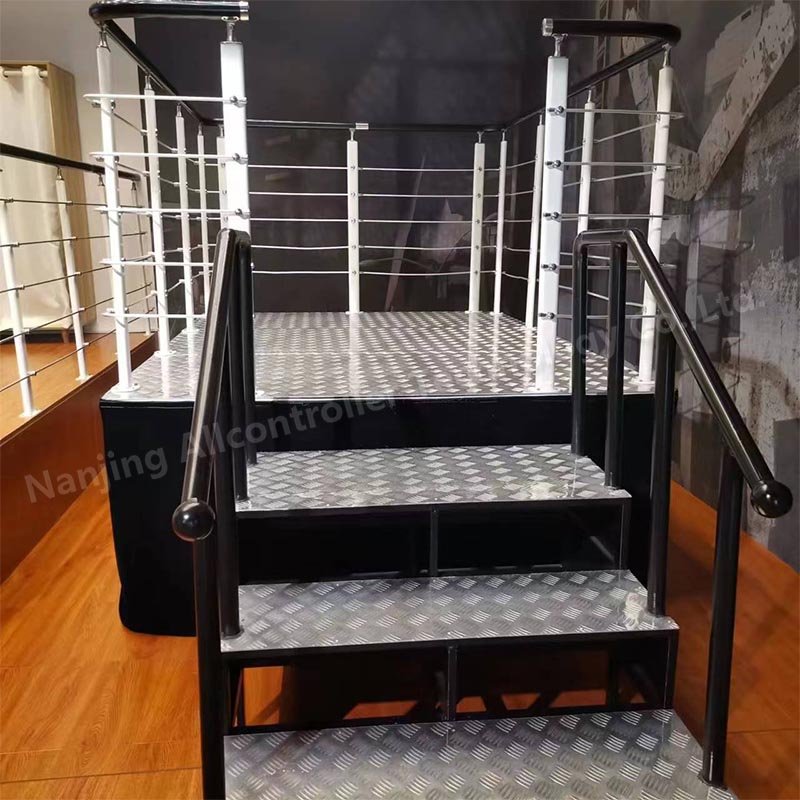
Seismic Wave Characteristics and 6dof Adaptation
Seismic waves are not simply “up and down vibrations”, but are composite vibrations containing P-waves, S-waves and Rayleigh waves, which are multi-directional, multi-frequency and non-linear in nature. The advantages of the 6DOF motion platform are:
Multi-dimensional motion: It can simultaneously simulate the translational motion of seismic waves in the horizontal (X/Y) and vertical (Z) directions, as well as rotational vibrations (e.g., building torsion effects).
Wide dynamic range: supports low-frequency long-period vibrations (e.g., high-rise building shaking) to high-frequency short-term shocks (e.g., pulse waves from fault rupture).
Waveform reproduction capability: Algorithms analyze real earthquake records and drive the platform to reproduce the actual vibration trajectory.
Key technical steps in earthquake simulation
Seismic data acquisition and processing
Data source: historical seismic records or synthetic seismic waves are used (to simulate fault movement through geological parameters).
Data adaptation: the original three-axis acceleration data (X/Y/Z) through the filtering, integration, normalization processing, adapted to the physical limits of the platform (such as travel, speed, load).
Motion control algorithm
Inverse kinematics solving: Seismic acceleration data are converted into displacement commands of the platform’s six electric cylinders to ensure that the platform motion is consistent with the target waveform.
Dynamic compensation: offset platform inertia, friction and other disturbances through PID control or model predictive control (MPC) algorithms to improve waveform restoration accuracy.
Real-time feedback adjustment: using high-precision sensors (such as laser displacement meter, inertial measurement unit IMU) to monitor the actual movement of the platform, closed-loop correction of the error.
Hardware drive and execution
Electric Servo System: motor-driven ball screws or linear motors to achieve precise positioning (better than the accuracy of traditional hydraulic systems).
Redundant Design: Equipped with multi-stage braking system and mechanical limits to prevent overload or loss of control (e.g. safety protection when simulating a magnitude 9 earthquake).
Application Scenarios
Earthquake Engineering Research
Provide controlled and repeatable vibration environments for colleges and research institutes, and help research breakthroughs in new seismic-resistant materials and structural design.
Disaster Prevention Drill and Public Safety
Improve the disaster response capability of government emergency departments, schools and enterprises by simulating earthquake scenarios of different magnitudes and durations.
Seismic Testing of Industrial Equipment
For high-value equipment such as nuclear power facilities and precision machine tools, Allcontroller’s earthquake simulators can simulate extreme seismic conditions and verify that their seismic performance meets international standards.
Contact the Allcontroller team now to customize your own earthquake simulation solution!