Table of Contents
Importance of Truck Simulator
The global logistics industry is developing rapidly. As one of the core of long-distance transportation, the importance of trucks is self-evident. However, the logistics industry has long faced the severe challenge of insufficient commercial drivers. Traditional on-site vehicle training is not only long-term and costly, but also accompanied by unavoidable safety risks.
Truck simulator came into being: they allow trainees to repeatedly practice complex road conditions such as urban congestion, mountain roads, and bad weather in a highly realistic virtual environment, significantly shortening the training cycle. More importantly, by transferring high-risk operations such as sudden braking, tire blowouts, and side sliding to safe and controllable simulation scenarios, it can significantly reduce the training accident rate, effectively protect the safety of trainees and property, and directly meet the market’s demand for efficient and safe driving training.
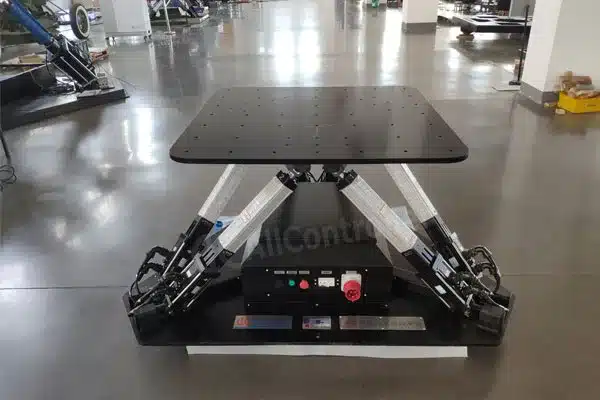
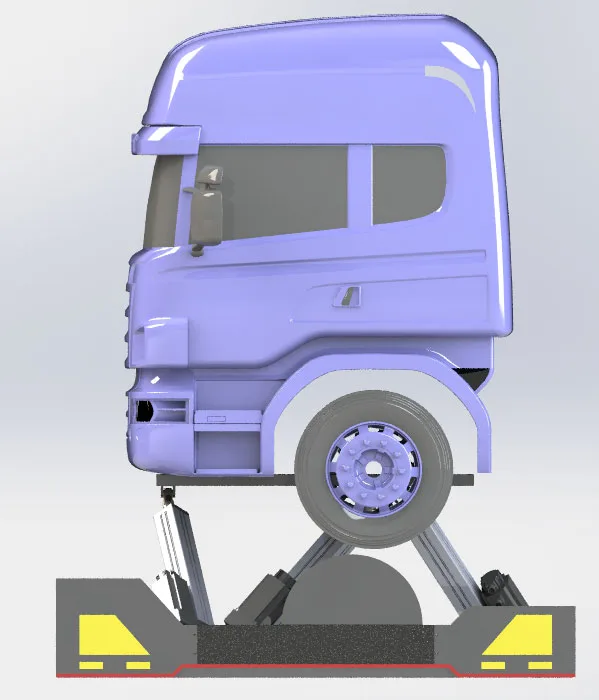
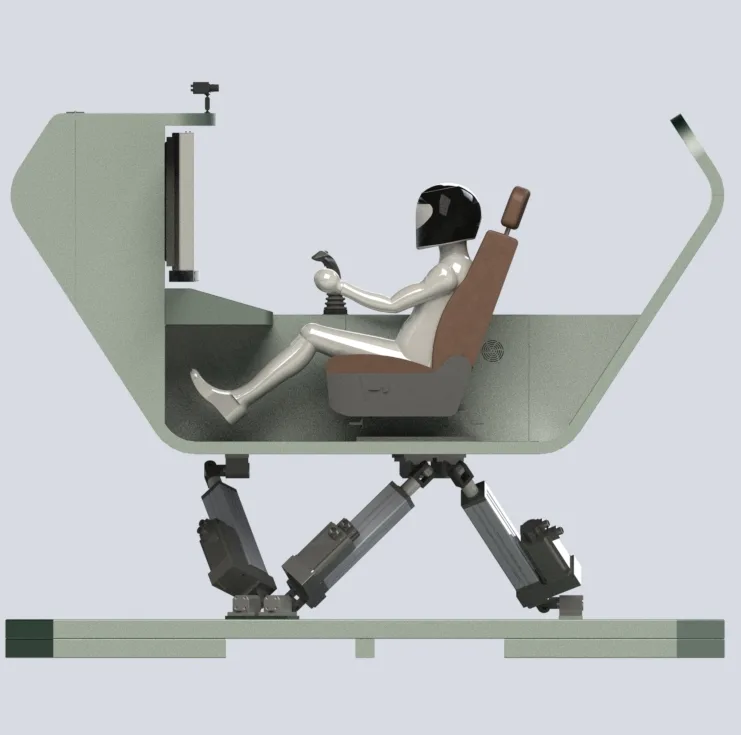
The truck simulator can realize the powerful function of transforming virtual reality into reality. Its core technical support lies in the six-degree-of-freedom motion platform. Through the precise coordination of six servo electric cylinders, the truck cockpit moves on the X, Y, and Z axes + rotates around three axes to achieve realistic movement with full freedom.
Truck simulator have built a very realistic training and testing environment, ensuring the basic needs of the commercial driver training market for efficient, safe, and low-cost solutions. At the same time, its simulation capabilities in the fields of logistics intelligent upgrades, national defense driving training, and autonomous driving algorithm testing are increasing, showing huge commercial value and technical potential. It is not only a tool to reduce training costs and transfer risks, but also the key to promoting technological progress and safety assurance in related industries.
What is Truck Simulator?
Truck simulator is a device used to simulate real truck driving operations and environments. Its main function is to provide users with a safe, controllable and highly simulated virtual driving experience.
A complete truck simulator system usually includes several key components:
Truck Cockpit
1:1 replica of the real truck driving environment, including steering wheel, gear lever, knob, pedals, instrument panel, center console, seat, etc. It is consistent with the real car, which makes it easier for students to integrate into the environment and get started.
Motion Platform
As the support of the cockpit, it can simulate the bumps, tilts, acceleration and deceleration of the vehicle during driving, greatly improving the real experience.
Visual system
Provides driving vision. It can be a projection system that surrounds a single screen or multiple screens, or VR glasses, which will greatly enhance the experience. The visual system is responsible for presenting realistic road environments, vehicle status, and traffic scenes.
Control software
Install sensors to monitor the position and orientation of the simulator seat. These sensors will feed real-time data back to the control system for dynamic adjustments. Commonly used sensors include accelerometers, gyroscopes, and encoders.
Implement motion control algorithms to synchronize the position and orientation of the simulator with the output of the simulation software. This involves PID controllers or more complex control methods to ensure that the platform can smoothly simulate driving actions such as acceleration, braking, and turning.
VR content software
Responsible for generating and managing the virtual driving environment, vehicle physics models, simulating different road traffic conditions, randomly generating realistic weather systems, processing user input and providing real-time feedback on vehicle status and visual effects.
Truck Simulator Applications
As the market develops and demand continues to increase, truck simulator systems will have significant differences in actual use and overall structure depending on the application goals:
Driving schools and transportation companies use it for training
This type of truck motion system usually pursues the maximum degree of realism. The cockpit, including the overall field of view and hardware structure, tends to be the same as the real car. The freedom of the bottom motion platform is guaranteed to a certain extent. The overall design and conception are to provide an operating experience that is almost the same as the real car, so as to achieve the best training effect.
Theme parks and high-end experience centers for entertainment
This type focuses more on entertainment, and may simplify the details of the cockpit, using simple joysticks, steering wheels, etc. instead of complex interiors and other details. However, the field of vision often uses cool VR equipment to provide an immersive visual experience to make up for the shortcomings of physical equipment. While weakening some actual machine operations under real pictures and physical sensations, it ensures the fun of virtual driving to the greatest extent.
Automakers, laboratories, etc. for R&D and testing
This type of truck simulator system requires extremely high accuracy, and places extra emphasis on software programmability and scenario building capabilities. It usually requires an open platform interface to connect to different programs. In the process of vehicle design verification, human-computer interaction research, and testing of cutting-edge technologies, it is inevitable that a large number of real situations are needed to determine whether they are feasible, such as the existing automatic parking system and the autonomous driving system that may be popular in the future. With the help of a simulator, the best effect can be achieved at the lowest cost.
How 6DOF motion platform is revolutionizing truck simulation
The current common solutions, whether high-definition screens or VR devices, can provide realistic images, but the key to transforming virtual driving into a realistic truck simulator experience lies in real physical feedback – this is exactly what the six-degree-of-freedom motion platform does. The six-degree-of-freedom motion platform can fully and accurately simulate the complex movements of trucks in the real world.
Driving feel reproduction
The 6DOF motion platform can realistically simulate the bumps of a truck going over a speed bump, the centrifugal force during a sharp turn, the tendency of a heavily loaded trailer to swing its tail, and even the dynamic feedback of extreme situations such as tire blowouts, side slips, and rollovers. This immersive experience allows trainees to develop deep “muscle memory” and instinctive reactions.
Virtual Reality
It is the six-degree-of-freedom technology that efficiently converts the virtual images on the screen into real physical feedback that the driver can perceive, making the simulation training of high-risk scenarios not only visual but also “personal”, greatly improving the effectiveness and safety of training and testing.
It can be said that the six-degree-of-freedom motion platform has completely changed the dimension of truck simulation. It allows the experience to no longer remain in vision and imagination. It gives the simulation a soul, synchronizes the body feeling with reality, and elevates the truck simulator system from “looking like” to “feeling real”, setting a new banner for driver training, vehicle testing and cutting-edge research. The six-degree-of-freedom platform allows truck simulation to truly synchronize with reality.
Allcontroller Truck Simulator Case Study
The most basic and core function of Truck Simulator is to simulate truck operation. Its excellent value makes Truck Simulator shine in many industries:
Driver training and skills improvement
This is the simplest and most basic way of application. With the development of the times and the advancement of science and technology, more and more high-end technologies such as autonomous driving have been pushed to the forefront of history. In order to facilitate drivers to adapt quickly, truck simulators on the market are also being updated with the latest vehicle interfaces. Researchers reproduce edge scenarios such as autonomous driving system failure, sensor failure, and network attacks through programming, and obtain countless data feedback through a large amount of safe and efficient training. While ensuring that the technical strength of drivers is improved, these high-tech technologies are also reversely verified.
Military and Special Driving Training
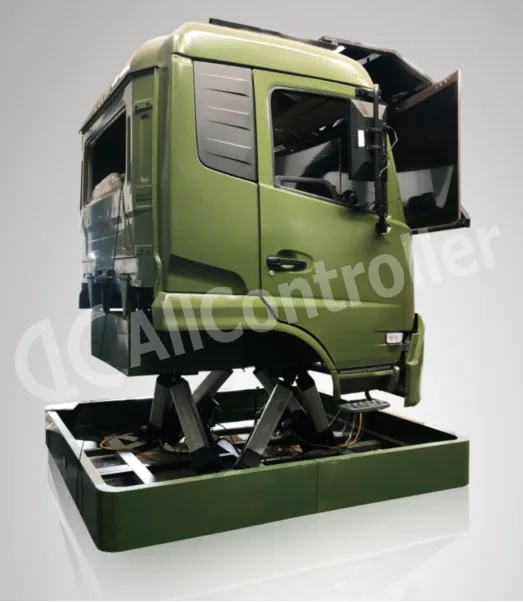
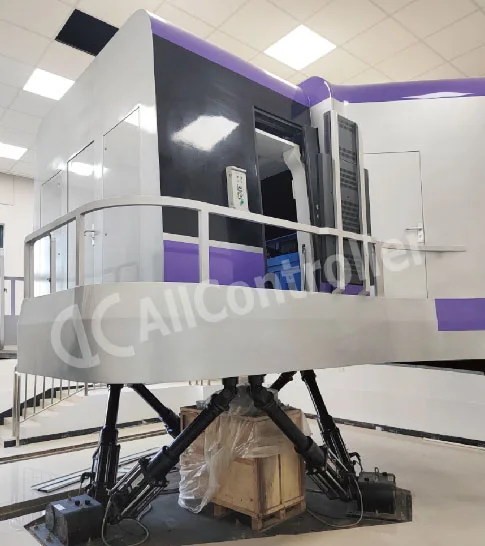
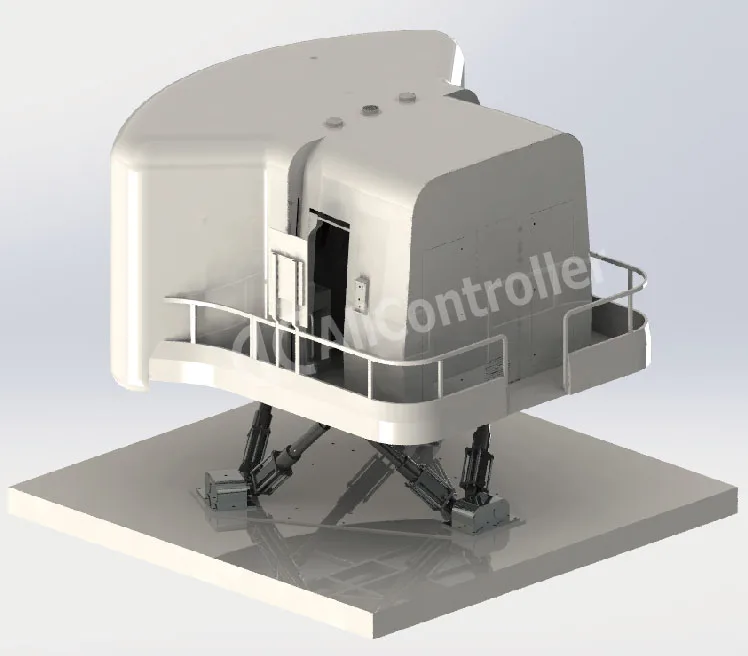
Unlike daily driving, the driving environment of military trucks is more complex. More and different changes need to be added to the original simulation. Truck driving simulators can build complex and changeable battlefield environments. Whether it is night-time dark driving, bombing avoidance, reconnaissance avoidance or extreme off-road terrain, they are all designed to train soldiers to make quick decisions on the battlefield, so that precise operations can form muscle memory and greatly improve the survivability of the battlefield. This is one of the ways with the lowest cost and the greatest effect besides real-car combat training.
Vehicle technology development and testing
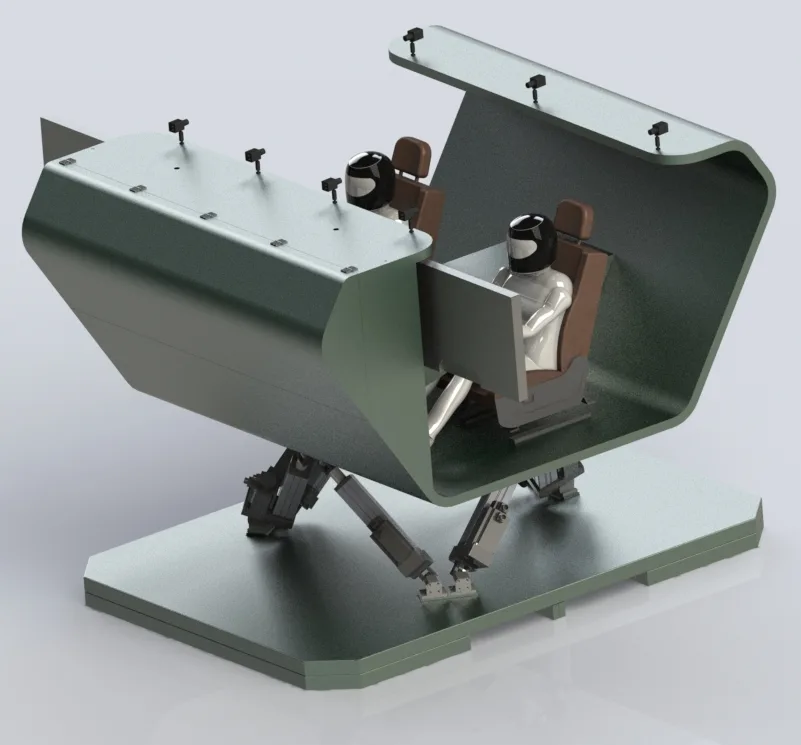
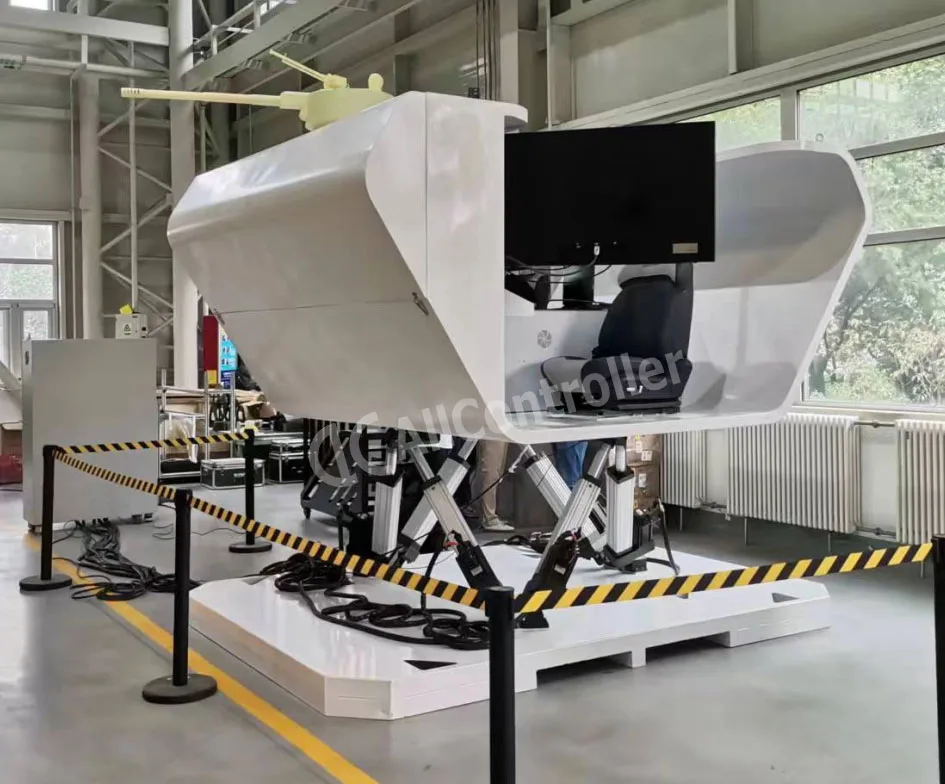
At present, common small cars already have a certain degree of intelligent driving, such as common automatic parking and automatic parking space search. Some manufacturers have also developed intelligent unmanned driving technology. However, compared with large trucks, some blind spots and excessive inertia caused by excessive weight are the top priorities. The emergence of these technologies requires a lot of testing and data. The cost of real cars is too high. As emphasized many times above, low-cost reproduction is an important role played by truck simulation in experimental testing.
How to Choose the Truck Simulator
In a truck simulator, the performance of the motion platform directly determines the authenticity and effectiveness of the simulation training. Whether your device is used for driving training, entertainment experience or technology research and development, it is crucial to choose a motion platform that meets the core needs. As a technology supplier and product manufacturer focusing on this field, Allcontroller recommends that you evaluate from the following dimensions:
Load
The motion platform needs to stably bear the weight of the cockpit, operating equipment and human body. Heavy truck simulators usually require a certain load capacity, and the value of entry-level entertainment equipment may be lower. If used in military or industrial scenarios, it is recommended to choose a large-tonnage platform.
Accuracy and response speed
This is divided into static accuracy and dynamic response. Equipment for different applications also has different values according to specific needs. These values ensure whether the platform can work normally and ensure that there is no action lag in the platform’s movements during movement, such as sharp turns, tire blowouts, and other scenarios.
Software Interface
Allcontroller’s motion platform provides free control software. We also support the mainstream simulation protocols in the market and open API interfaces. This also allows customers to better and faster match their self-developed programs or software with the motion platform.
The 6DOF motion platform is not only a motion base, but also the entrance to the driving behavior database. It can collect data such as steering wheel torque and pedal travel in real time. These data not only provide data support for the driver’s post-driving review, but also provide a basic guarantee for software upgrades. It can be said that this hardware platform will continue to increase in value with technological progress and intelligent upgrades.
Allcontroller Truck Simulator Solution
When we talk about the high-efficiency simulation, very low cost and other specific data comparisons of truck simulators, it is essentially a long-term requirement for simulation training effects and long-term investment returns. Behind the simple and cold numbers, the platform’s customization capabilities, software integration, perfect after-sales service, and matching continuous technical support and after-sales service are the key to the successful implementation of the project and its long-term value. Allcontroller has been specializing in the production of motion platforms and motion simulators for more than 15 years. We have the hard power to undertake projects and these heartwarming services.
Truck Simulator with Real Truck Transformation
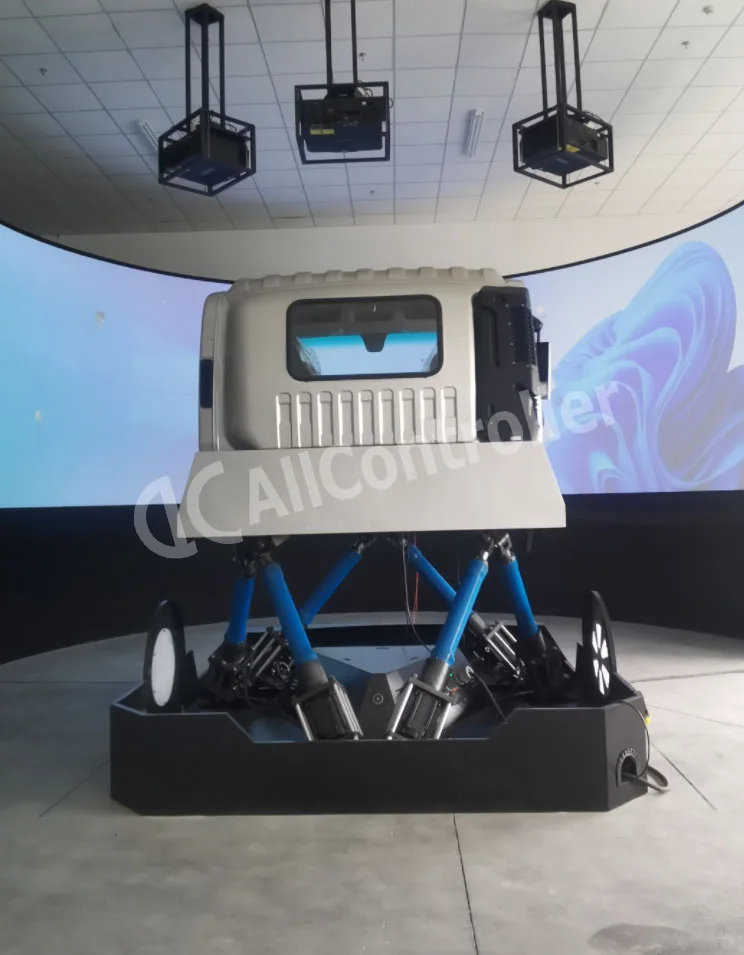
Use a large-load simulator to modify the real car cockpit platform to modify the real car interior, use the real car steering wheel for vehicle control, and install the DMS monitoring system to identify and monitor the driver’s behavior and status. Spliced ring screen projection, 180-degree horizontal field of view completely covers the front windshield, and obtains the ultimate immersive experience. The heavy-duty six-degree-of-freedom platform and large load support the platform modification on the real car, providing greater motion posture control. Real vehicle cockpit modification, including real and available vehicle interior and controls, seamless modification and embedded control equipment. Real equipment control, self-developed direct drive control system based on real car parts non-destructive modification uses real car steering wheel and pedals to control the vehicle.
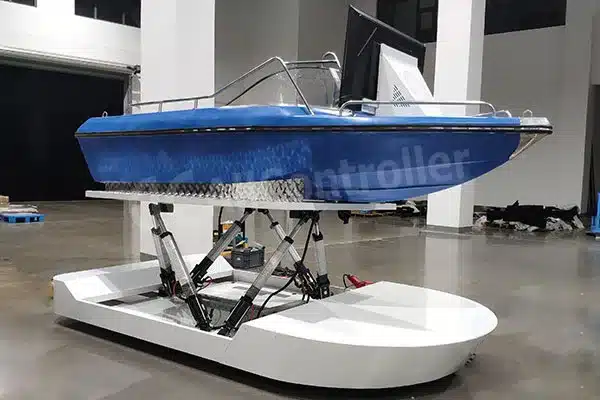
Virtual simulation experiment motion simulator
The virtual simulation experiment motion simulator uses a six-degree-of-freedom parallel mechanism as the cockpit control simulation system, which can realize the fast and stable response of the cockpit to the simulation graphics. It generates the virtual visual environment, sound effects and motion simulation and other driving environments in the rail transit driving process in real time by simulating the cockpit and the computer. The visual simulation management software realizes the “immersive and interactive” characteristics of the virtual environment, providing the driver with a sense of motion presence on slopes, bumpy roads, and when the vehicle accelerates, decelerates, turns, and skids. At the same time, it can conduct full-condition simulation experiments including critical and extreme conditions for various types of vehicles such as cars, trucks, and buses, analyze, estimate and evaluate the vehicle’s handling stability, safety, braking, power and fuel economy, simulate, evaluate, predict and optimize the motion performance control system, and provide the optimal solution for the matching of vehicle structure parameters. It has important and practical significance for the design and development of rail transit.
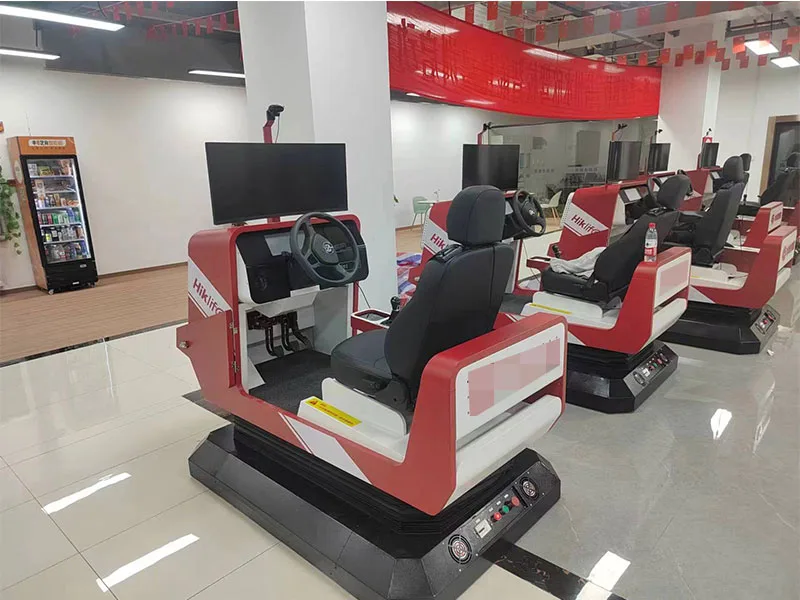
Driving training simulator
An artificial environment is constructed using computer 3D virtual simulation technology, automobile dynamics simulation physics system, large field of view display technology, six-degree-of-freedom motion platform, real car user input hardware system, stereo sound, central control system, etc., to produce a realistic 3D road driving scene. The terminal’s steering wheel, accelerator, clutch, brake, gear, instrument, and operation methods are basically the same as those of a real car. The supporting software uses a 3D terrain module, and the system uses graphics computing acceleration and high-speed display system, giving a strong immersive feeling.
Truck Simulator FAQ
A 6-DOF motion platform is crucial for achieving true physical immersion and maximizing training transfer. Simpler systems (e.g., 2-DOF, 3-DOF) or static simulators cannot replicate the complex multi-axis forces and sensations experienced in a real truck (e.g., chassis roll during turns, engine vibration, road imperfections, pitch during braking/acceleration). The high-fidelity motion cues provided by 6-DOF are vital for developing muscle memory, improving spatial awareness, enhancing decision-making under dynamic conditions, and reducing simulator sickness by accurately synchronizing visual and vestibular inputs. This level of realism directly translates to more effective and safer real-world operation.
Our simulators are highly versatile and can support a wide range of training objectives, including:
Basic Driver Training: Vehicle familiarization, start-up/shutdown procedures, basic maneuvering, shifting, braking.
Advanced Driving Techniques: Defensive driving, hazard perception, slippery surface handling, emergency braking, evasive maneuvers.
Specific Vehicle Operations: Training for different truck types (e.g., tractor-trailers, rigid trucks, off-road military vehicles), heavy loads, specialized equipment.
Adverse Conditions Training: Driving in rain, snow, fog, night conditions, high winds, limited visibility.
Tactical and Military Training: Convoy operations, off-road navigation, tactical maneuvers, reaction to threats, vehicle recovery, logistics support.
Eco-Driving and Fuel Efficiency Training: Optimizing gear selection, acceleration, and braking for reduced fuel consumption.
Assessment and Evaluation: Objective performance evaluation for new recruits or ongoing proficiency checks for experienced drivers.
While a 6-DOF platform offers superior realism, it does require a dedicated space. Specific dimensions and power requirements vary depending on the exact model and configuration (e.g., single-screen, multi-screen, full cab). Our technical team will work closely with you during the planning phase to assess your facility and provide detailed specifications to ensure seamless integration.
We offer comprehensive maintenance and support services to ensure your simulator lasts and keeps running. These include:
Installation and commissioning: Our expert technicians will complete complete setup and testing at your site.
Onsite training: Comprehensive simulator operation and basic troubleshooting training for your instructors and maintenance personnel.
Warranty and technical support: The standard warranty covers both hardware and software and is backed by a responsive technical support team that can provide remote assistance or onsite visits as needed.
Software updates: Regular software updates ensure you always have the latest features, scenarios, and vehicle models.
Preventive maintenance: Optional service contracts for routine inspections and preventive maintenance to maximize uptime.
Simulator training complements and significantly enhances real-world training. While it cannot fully replace the final stages of hands-on experience, it offers unparalleled advantages:
Enhanced Safety: Eliminates risk of accidents, injuries, and equipment damage.
Cost Reduction: Saves significantly on fuel, vehicle wear, insurance, and instructor hours.
Repeatability: Allows for unlimited repetition of critical or high-risk scenarios until mastery is achieved.
Controlled Environment: Isolates specific skills for focused practice without external distractions or uncontrollable variables.
Objective Measurement: Provides precise data for performance evaluation that is difficult to capture in real-world settings.
Exposure to Rare Events: Trains operators for emergencies (e.g., tire blowouts, brake failure) that are too dangerous or impractical to simulate in real vehicles.
Reduced Environmental Impact: Contributes to a greener training footprint by minimizing fuel consumption and emissions.
In many cases, incorporating high-fidelity simulation training can reduce the overall time and cost required to achieve proficiency, while significantly improving the quality and consistency of training outcomes.
Our systems are built with open architecture principles where possible to facilitate integration. We can discuss your specific integration needs, whether it's linking to a Learning Management System (LMS) for tracking trainee progress or connecting with other simulation systems for joint exercises. Please contact us to explore the possibilities for your unique setup.
The Future of Truck Simulation
The development of driverless cars is very rapid. Truck simulators are not only a training ground for drivers, but also provide rich scenarios for algorithm data. In the infinitely generated complex scenarios, they jointly promote technological development and progress of the times based on specific applications in various industries.
While pursuing extremely realistic physical feedback and real pictures, it always ensures absolute safety, absolute efficiency and absolute low cost, which is an advantage that real cars can never match.
The Allcontroller team is the largest manufacturer of Stewart parallel robots and motion controller systems in China, with rich project experience and solutions. We look forward to working with customers from all industries around the world, and we also look forward to working with you.