LocLab Kinematics and PowerLab Dynamics Analysis of Stewart Motion Platform
Allcontroller
The LocLab kinematics and PowerLab dynamics analysis of the Stewart motion platform is the basis for subsequent structural optimization and controller design, so it is of great significance to study its kinematics and dynamics theory.
At present, there are two main dynamic model analysis methods for the Stewart platform: Lagrange method and Newton-Euler method.
Among LocLab kinematics and PowerLab dynamics analysis, the Lagrange method only needs to calculate the kinetic energy and potential energy of the system to determine the dynamic characteristics of the system, so this method is relatively simple and conducive to the formulation of control strategies.
Kinematic analysis diagram
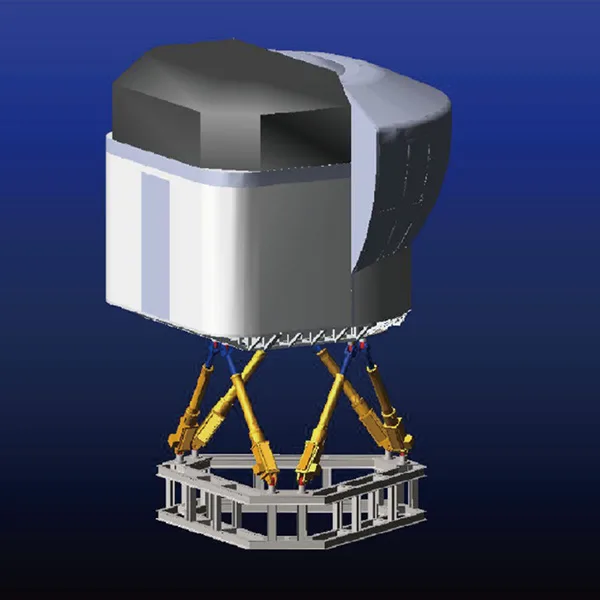
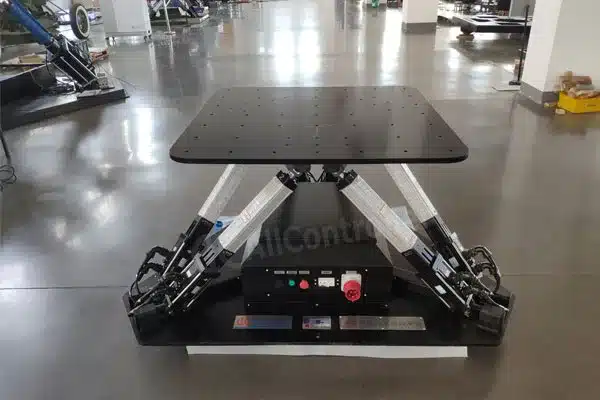
LocLab kinematics and PowerLab dynamics analysis was carried out on the designed Stewart motion platform TecPlat. On this basis, the dynamic model and vibration model of the model were established through Adams software. The vibration characteristics of the Stewart six-degree-of-freedom parallel platform dynamic model were analyzed, providing theoretical and technical support for improving the control accuracy of the Stewart motion platform TecPlat.
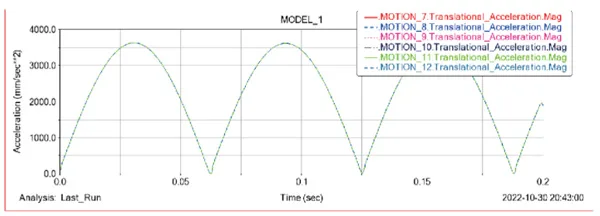
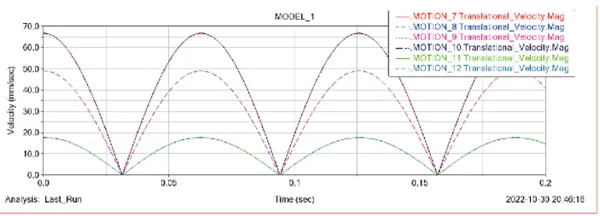
Through multi-body dynamics simulation with Adams, the relationship between the displacement (angle), velocity and acceleration of each component of the system can be obtained.
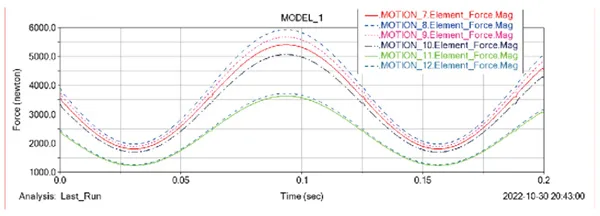
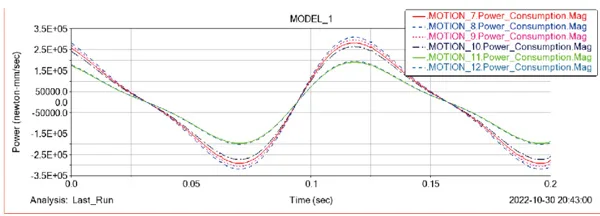
The dynamic changes of thrust and power of each electric cylinder when the platform moves in different postures can also be obtained, providing a theoretical basis for the design, selection and optimization of the 6DOF parallel robot.
Adams uses the first Lagrangian equation with Lagrangian multipliers to derive the differential algebraic equation (DAE) with the maximum number of coordinates. It selects the three rectangular coordinates of the center of mass of each rigid body in the system in the inertial reference frame and the three Euler angles that determine the orientation of the rigid body as Cartesian generalized coordinates, uses the first Lagrangian equation with multipliers to process the complete constraint system or non-complete constraint system with redundant coordinates, and derives the dynamic equation with Cartesian generalized coordinates as variables.
When designing mechanical structures, static strength theory is gradually insufficient to meet all design requirements. Vibration theory and dynamic analysis theory have greatly changed people’s design concepts.
At the same time, people are paying more and more attention to the dynamic performance of mechanical equipment and have put forward higher requirements.
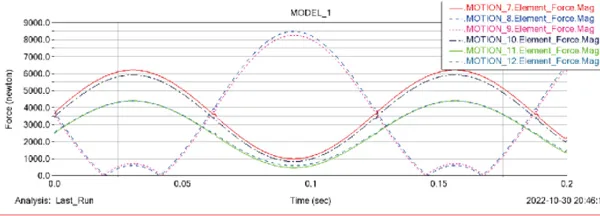
Lift Thrust Curve
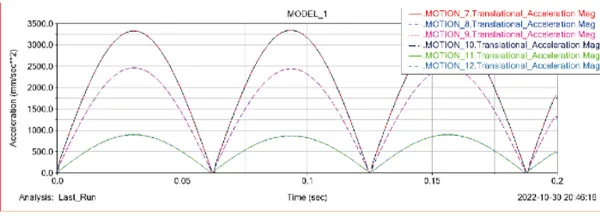
Acceleration curve of lifting electric cylinder
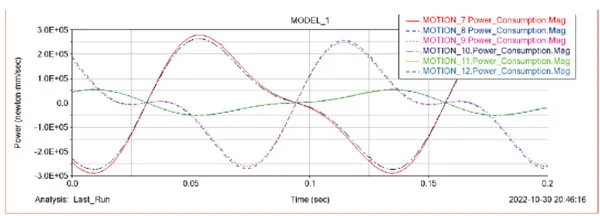
Rising and falling power curve
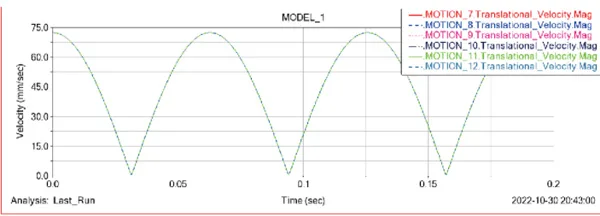
Lifting electric cylinder speed curve
Longitudinal displacement thrust curve
Longitudinal displacement electric cylinder acceleration curve
Longitudinal displacement power curve
Longitudinal displacement velocity curve
By using well-functioning finite element analysis software and high-performance computer hardware to conduct detailed dynamic analysis and motion characteristics analysis of industrial robots, various problems that arise in the design stage can be reduced.
And the design parameters can be optimized based on these calculation results to make the overall structure have good dynamic performance. These factors will directly affect the dynamic accuracy, stability and reliability of the robot.