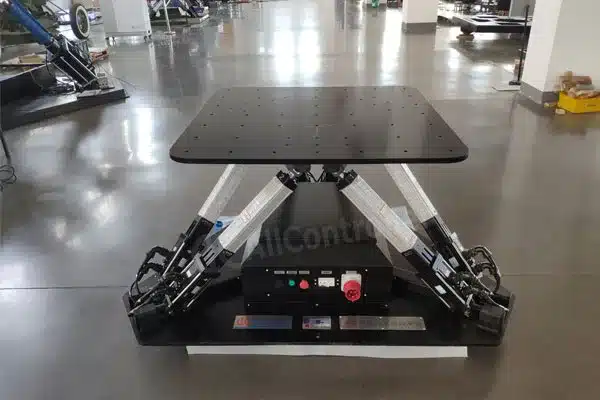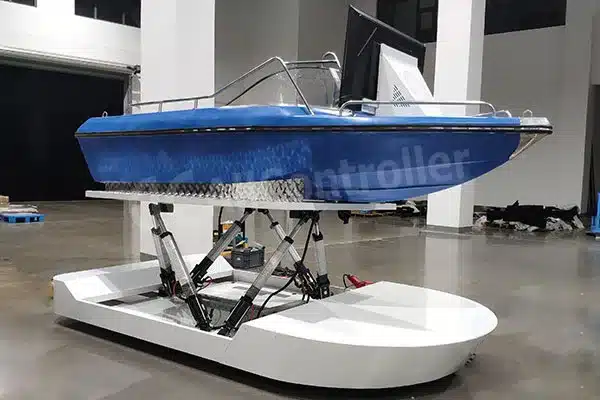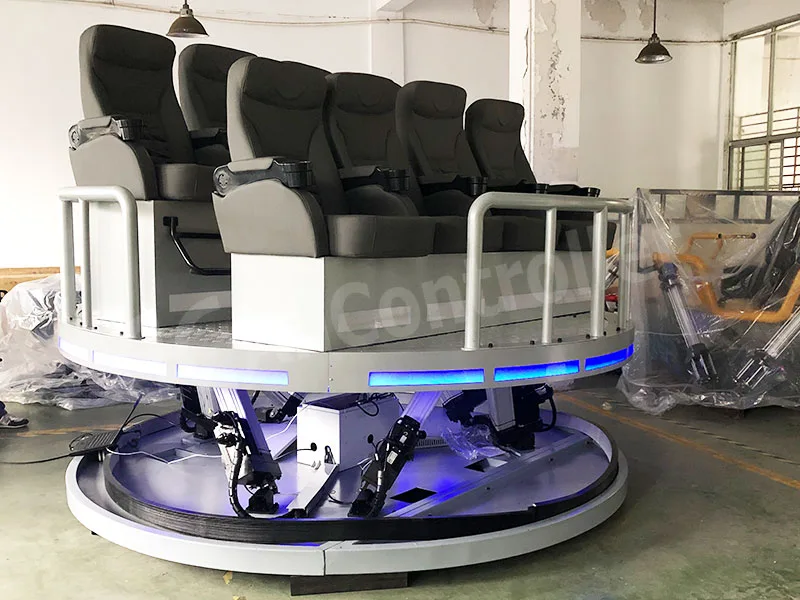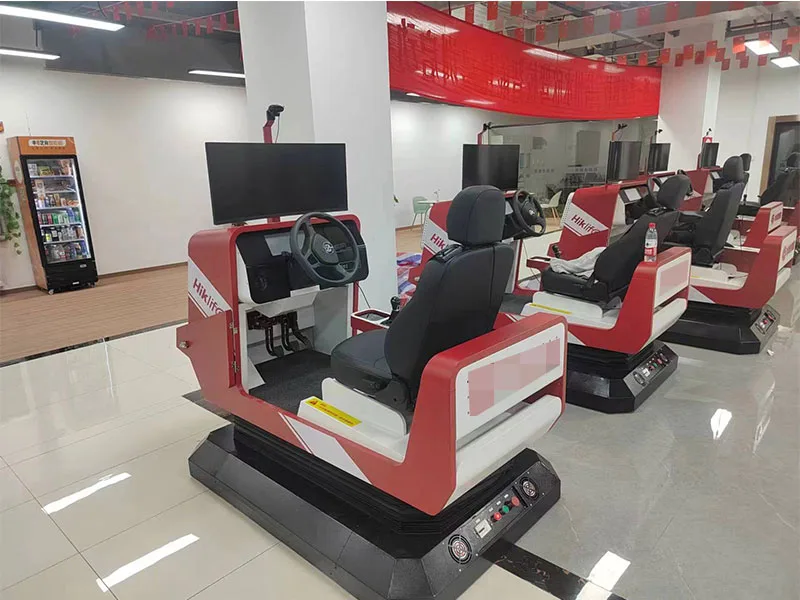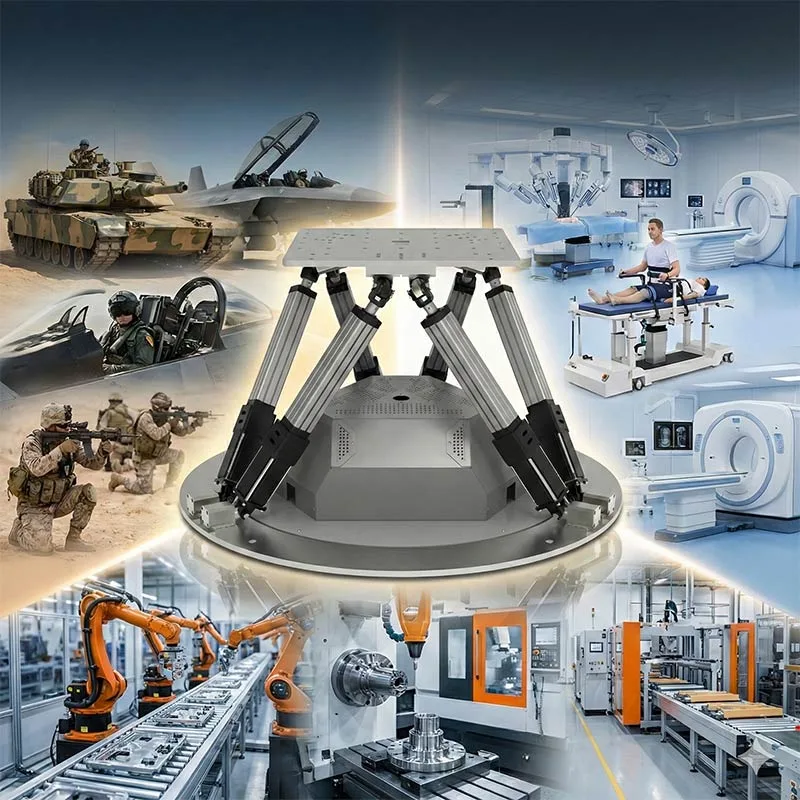
Motion platform is a sophisticated multi-axis system that utilizes actuators and control algorithms to simulate physical movement or provide precise positioning in applications ranging from military flight simulation and medical robotic surgery to high-precision manufacturing.
By integrating 3DOF or 6DOF kinematics, these platforms allow industries to replicate real-world dynamic conditions in a controlled environment, significantly reducing R&D costs while enhancing training safety and operational accuracy.
On our side at Allcontroller, I’ve learned the same lesson again and again: buyers don’t “need 6DOF,” they need a reliable outcome—less scrap, safer training, faster iteration, or better patient rehab.
Table of Contents
Why buy motion platform?
If you’re in manufacturing, defense, or medical robotics, your pain usually sounds like one of these:
- “We can’t validate performance in the lab the way it fails in the field.”
- “Our training is expensive, risky, and hard to repeat.”
- “The patient/robot needs consistent motion stimuli, not a therapist’s guesswork.”
- “We built a DIY rig… and now the tuning never ends.”
That’s exactly why the Stewart/hexapod family exists in the first place—six actuators, coordinated control, repeatable pose generation.
Where motion platform create the most value
Smart Manufacturing & R&D: The Invisible Workhorse
In manufacturing, motion platforms show up less as “simulation toys” and more as repeatable physical truth machines:
Common buying triggers
- durability / vibration exposure testing
- vehicle & equipment R&D validatio
- precision positioning when stacked stages hit a “precision ceiling”
What I recommend you anchor your RFQ on
- position stabilization time
- overshoot
- drift over time
- repeatability under real payload inertia
Those aren’t random terms—ISO 9283 literally lists things like position stabilization time, overshoot, and drift as testable performance characteristics.
Allcontroller Recommended Reading
Industrial testing case: 600KG load 6DOF motion platform
If you want a quick “how serious is this tech” reference: modern reviews of parallel kinematic machines focus heavily on kinematics/dynamics, error analysis, and calibration because those are the bottlenecks in real industrial performance.
Defense & military-facing training: repeatability beats heroics
I’ll be blunt: the strongest defense use-case is not “cool motion,” it’s repeatable exposure—you can run the same scenario 200 times without risking people or assets.
Typical applications
- flight/driving training cues (attitude, turbulence, braking, lateral forces)
- mission rehearsal environments
- shipboard stabilization / compensation for operations on waves
Allcontroller Recommended Reading
Buying note : a motion platform is easier to justify when you define what gets measured. If you can’t write the acceptance test, you’re basically buying hope.
Medical robotics & rehab: controlled motion becomes “measurable therapy”
This one gets personal for me, because the first time I saw a rehab platform spec, I thought: “This is basically industrial motion control… but the payload is a human nervous system.” It’s humbling.
Where motion platforms fit
- rehabilitation training that needs repeatable motion stimuli
- biomechanics assessment rigs
- medical training simulators that combine motion + scenario replication
There’s solid research on 6DoF parallel robots used for rehabilitation exercises, focusing on how parallel mechanisms can perform various rehab motions reliably.
And there are systems built specifically for 6DOF biomechanical testing using hexapod-style architectures.
Relevant Allcontroller case:Malaysian hospital medical training simulator project
Motion Platform Buying Guide
If your goal is precision pose + fast settling
Also consider our hexapod/parallel kinematics education content if your team is comparing architectures
If your goal is cost-controlled motion cues (training / simulation) with simpler integration
3DOF motion platform can be a clean fit
If your goal is non-standard payload, geometry, or a “weird” environment
Go straight to custom motion platform and treat it like an engineered system, not a catalog item.
Mandatory checklist before purchasing motion platform
When someone submits “Need a motion platform. Price?” I get it—but that message usually leads to 10 rounds of email.
If you want a meaningful proposal quickly, send these:
Payload mass + inertia + center of gravity range
Required workspace (translations + rotations)
Target stabilization time / overshoot / drift acceptance criteria
Duty cycle (8h/day? 24/7?)
Integration: bus/real-time needs, software hooks, safety expectations
Once you provide the answers to the questions in the list above, we can provide you with a detailed proposal.
FAQ: Motion Platform Applications
Which is better for military training: 3DOF or 6DOF?
For basic driving or flight orientation, 3DOF (Heave, Pitch, Roll) is often sufficient. However, for full combat simulation where “Surge,” “Sway,” and “Yaw” are critical to situational awareness, a 6DOF motion system is the industry standard.
Can motion platform be used in cleanroom (medical) environments?
Yes, but they must use specialized electric linear actuators that are grease-free or sealed to prevent particle contamination. We offer custom-designed medical-grade housings for these specific needs.
What is the typical lifespan of an industrial motion platform?
With proper maintenance of the servo systems and ball screws, an Allcontroller platform is designed for a service life exceeding 10,000 operational hours.
What is the core challenge of your current project? Whether it’s a high-G military simulation or a delicate medical calibration, I’d love to hear your specs and see if we can build a solution that moves you forward.